AI-Native Designer & Developer
I design things
and then build them.
Most designers hand off to developers. I skip that step. Three-plus years of research, Figma, and shipping real code, usually all in the same sprint.
I design with code in mind, because I write it too.
Early on I kept watching my designs come back from dev looking nothing like what I intended. So I learned to code properly. Not enough to talk to developers, enough to ship production React. That changed how I design.
I've worked across e-commerce, SaaS, and service businesses. The brief is almost always wrong about something. Finding out what before the build starts is most of the job.
I also run AI agents as part of how I work, for research synthesis, rapid prototyping, and production code. Not to go faster. To do things that used to take a team.
- Vancouver, BC
- Open to remote
- Bilingual EN / ES
- Design + Code

Research first
Talk to users before Figma.
Code fluency
I know what is painful to build.
Systems thinking
Tokens and components, not one-off screens.
AI direction
I run agents. I do not just use tools.
Three projects I'm genuinely proud of.
Real problems, real products, real code. Each one took longer than expected and came out better than planned.
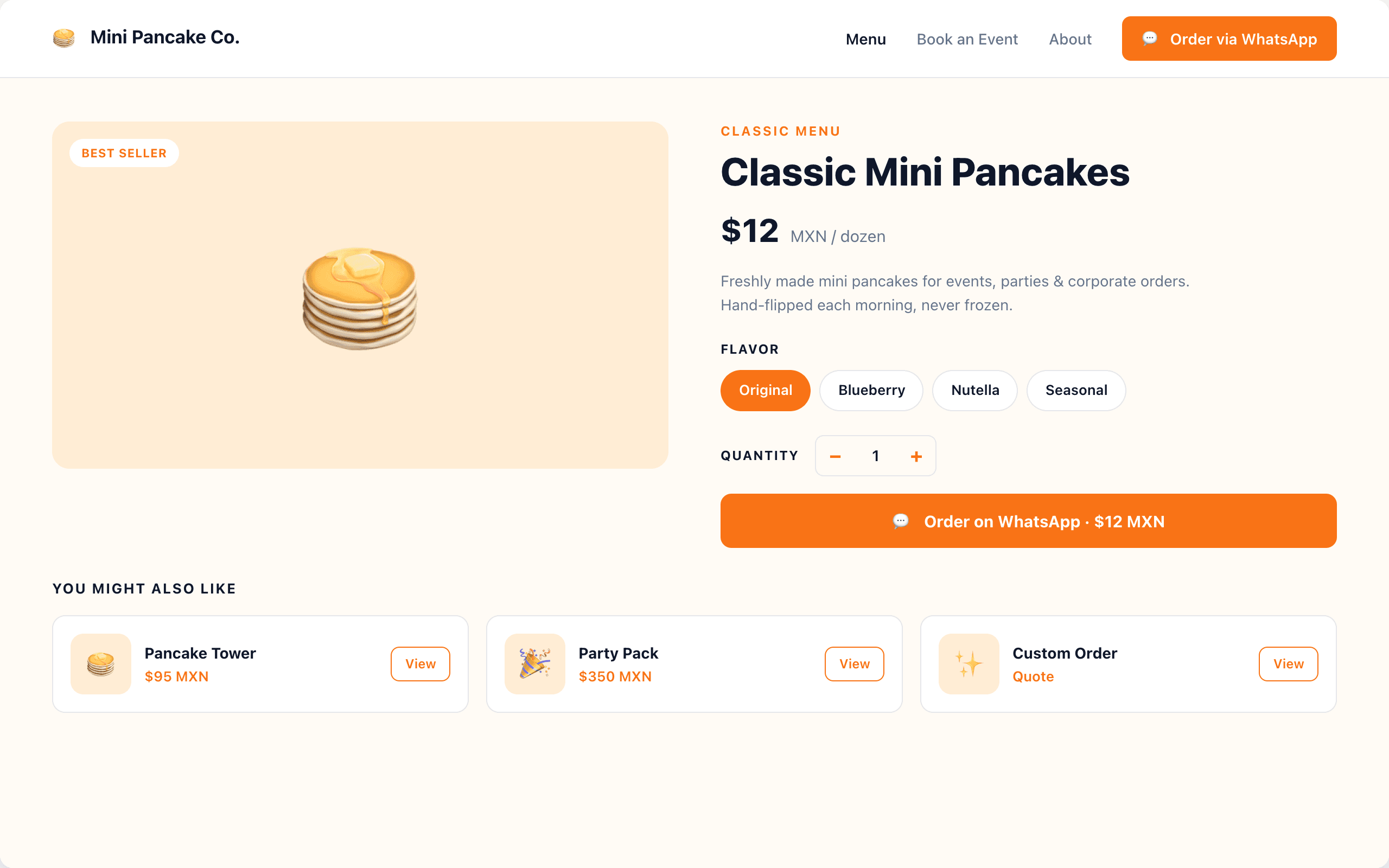
Mini Pancake Co.
A complete React rebuild of a 5-page college site into a production e-commerce + event booking platform for a mini pancake business in Mazatlán, with WhatsApp checkout, a 5-step booking wizard, and a 3-tab admin dashboard.
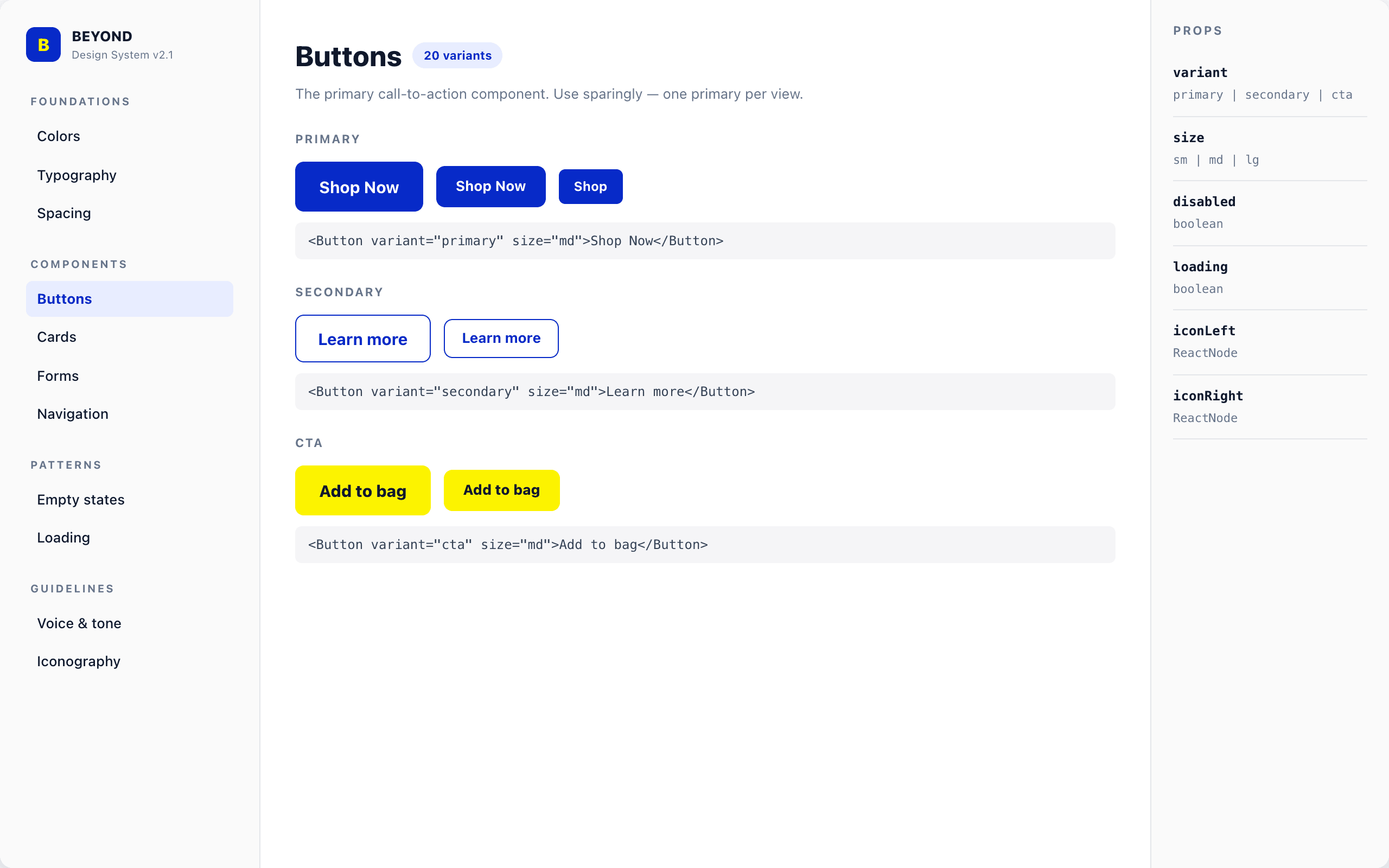
BEYOND Skincare
A production-grade design system for a skincare brand, 20+ atomic components, design tokens, full dark/light theming, and WCAG 2.1 AA conformance audited with WAVE. Built with React, TypeScript, and Tailwind.
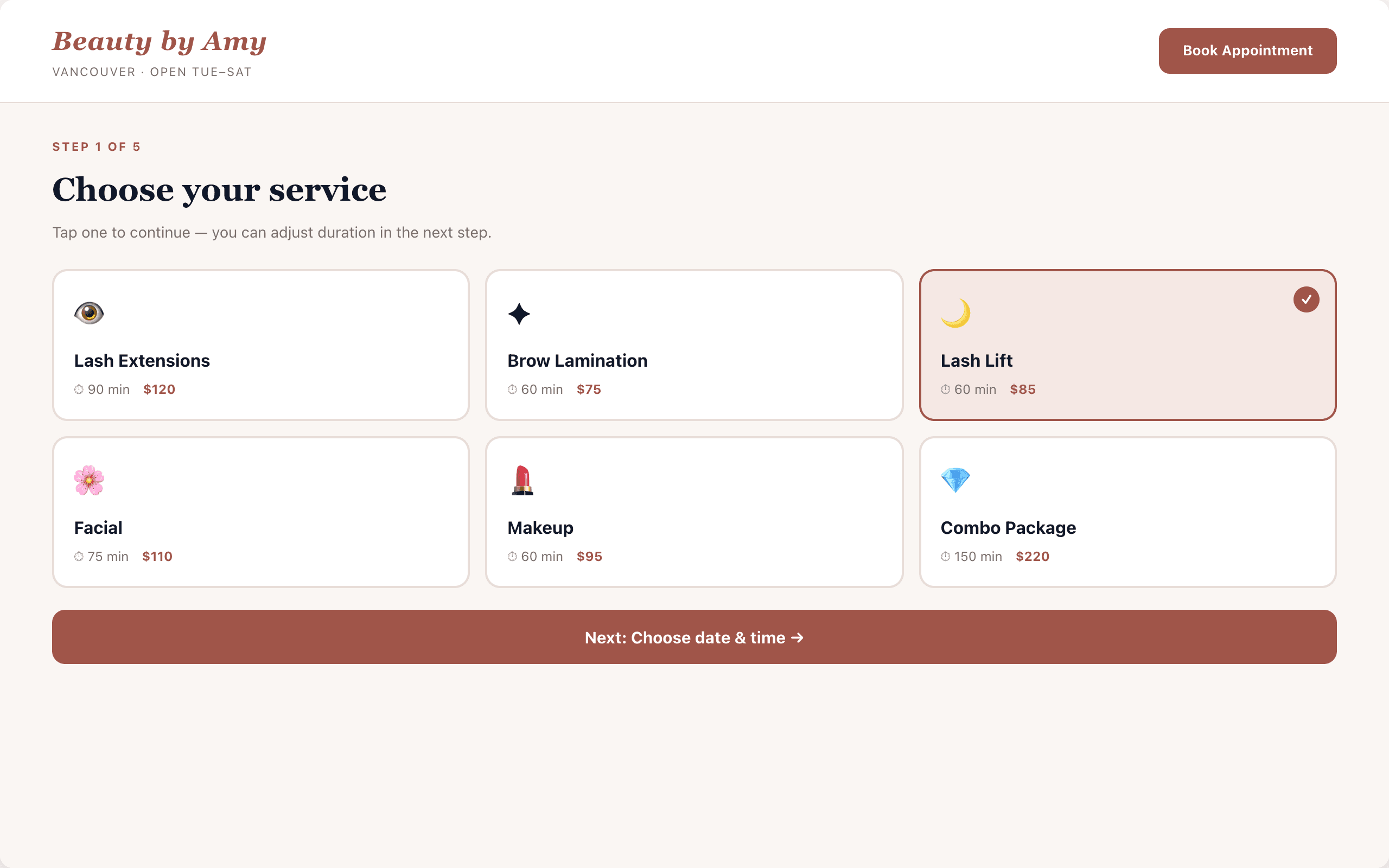
Beauty by Amy
A complete React rebuild of a 4-page college project into a production booking platform, 5-step wizard, admin dashboard with full CRUD, dark mode, and a Framer Motion-driven motion system.
I use AI the way a director uses a crew.
I'm not faster because of AI. I'm capable of more. Research synthesis, rapid prototyping, accessibility audits, I have agent workflows for all of it. My job is knowing what to build and whether the output is any good.
Research synthesis
I feed raw interview transcripts into pipelines I have built. Themes surface in minutes. What I do with them takes longer.
Rapid prototyping
Describe the interaction, get a working prototype back. Review, redirect, refine. The judgment is mine. The production layer is delegated.
Shipping with agents
Components, copy variants, accessibility audits. I am the captain. The agents are the crew. Someone still has to know where the ship is going.
Tools I direct
Same four steps every time. Boring on purpose.
The results are less boring.
Discover
Listen first. Interviews, recordings, analytics. The actual problem is rarely the stated one.
Define
Turn the research into something everyone agrees on before opening Figma. Saves most of the revision cycles.
Design
Lo-fi first, every time. Test early, find the gaps, then refine. By the time it looks polished it has been validated.
Deliver
Clean specs, annotated files, and code when the handoff actually matters. I stay close until it is live.
One-tap WhatsApp checkout
Self-serve booking, not DMs
WCAG 2.1 AA, audited with WAVE
3 projects, designed and built
Working on something? Let's talk.
Whether it is a role, a project, or a question about how I work, I read everything and I am usually fast.